A Digital Divide Among Small Businesses
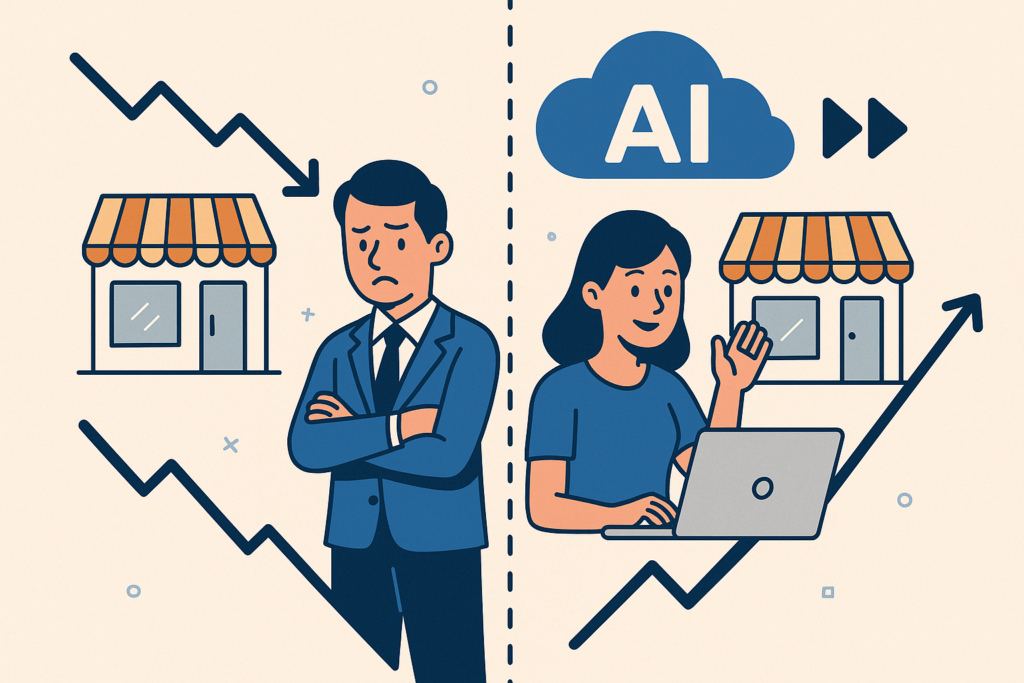
A new “AI divide” is emerging in the small business world. This isn’t just the old gap between big companies and mom-and-pop shops – it’s a divide within the small business community itself. On one side are the savvy early adopters of artificial intelligence, already streamlining operations and wowing customers. On the other side are those taking a “wait and see” approach. The difference is growing more pronounced every day. In fact, one recent report found that 94% of small businesses plan to incorporate AI into their operations in 2024linkedin.com. The message is clear: nearly all your peers are exploring AI, and if you’re not, you could be left on the wrong side of this divide.
Early Adopters Reaping the Benefits
Small businesses embracing AI early are seeing significant advantages. They’re using AI tools to automate mundane tasks, gain insights from data, and respond to customers faster. This means leaner operations, quicker service, and often lower costs. For example, an owner might use AI to automatically sort customer emails or manage inventory levels in real-time. These enhancements free up time to focus on growth and customer relationships. Early adopters often describe AI as a “force multiplier” – it’s like having extra hands (or an extra brain) in the business. It’s no surprise that many who leverage AI report improvements in efficiency and customer satisfaction. (One survey noted that about 72% of small businesses using AI-driven customer support see faster resolution times for customer issues colorwhistle.com.) In short, the businesses jumping on AI are working smarter, not harder, and it shows in their bottom line.
Late Adopters Risk Falling Behind
Meanwhile, small businesses that ignore or delay AI adoption face growing challenges. As competitors become faster and more responsive thanks to automation, late adopters struggle to keep up. Routine tasks that could be automated eat up precious hours. Customer inquiries might go unanswered overnight while competitors’ AI chatbots handle questions 24/7. Over time, these differences add up. A client might choose a service provider who offers near-instant quotes or support (powered by AI) over one who doesn’t. The risk is that late adopters will appear less efficient, less attentive, and ultimately less competitive in the eyes of customers. The AI divide means that what was “good enough” service a year or two ago may now feel sluggish and outdated if your rivals have upgraded their capabilities.
Real-World Examples of AI in Action
To understand the divide, consider a few real-world style examples of how small businesses are using AI today:
- E-commerce Shop with AI Chatbots: A small online retail shop deploys an AI chatbot to answer customer questions and help with orders 24/7. Shoppers can get instant responses at any hour, improving the shopping experience. The owner saves time on customer service, and no customer is left waiting. It’s paying off – surveys show that businesses using AI-driven customer support resolve issues much faster, keeping customers happier colorwhistle.com.
- Solo Freelancer Leveraging AI: Imagine a freelance graphic designer who uses AI tools as a virtual assistant. They employ AI to schedule meetings, draft project proposals, and even generate initial design ideas. This freelancer can manage more clients at once because repetitive tasks are handled efficiently by software. As a result, they can take on new projects that a competitor (who does everything manually) might have to turn down.
- Small Consultancy Analyzing Feedback: A boutique consulting firm uses AI to sift through client feedback and market research data. Instead of spending days reading surveys and reviews, they let an AI program summarize sentiments and highlight key trends in minutes. This means the firm can update strategies or solve client issues faster than rivals still sorting data by hand. Speedy insights give them a competitive edge – they’re proactive rather than reactive.
Each of these examples shows how adopting AI can help a small business punch above its weight. These aren’t sci-fi scenarios or something only giant corporations do. They’re happening now in the small business arena, and the businesses implementing such solutions are pulling ahead of those who aren’t.
Bridging the AI Divide
The good news is that it’s not too late for businesses on the sidelines to catch up. AI technology is becoming more accessible and user-friendly, with many tools designed for non-experts. Small business owners can start with modest steps – like automating a single task or experimenting with an AI-based service – to gradually build their AI capabilities. What’s important is developing an openness to new tech and a willingness to learn. In a sense, the biggest divider is mindset: companies that treat AI as a opportunity vs. those that shy away from it. By staying curious and proactive about these tools, any business can begin to close the gap.
In today’s fast-changing landscape, standing still is the same as moving backward. The AI divide will continue to widen between the quick adopters and the hesitant. The question is, which side of that divide will your business be on? Is your business adapting fast enough to stay on the right side of the AI divide?